
India Goddess PilgrimageSex, Death, Rebirth & Ritual at the feet of the Primordial Mother
Eight nights, nine days for advanced women and femmes: from Mumbai, to the open-bodied, lotus-headed Lajja Gauri in Karnataka, to Kali's ghat in Kolkata, where the temple and the home for the dying stand side by side. You already know how to listen. Now go where she lives.
More than a pilgrimage: four weeks of preparation with your guides, nine days in India with a circle of six, and integration when you come home.
Soul sisters. Sadhakas. Your guides.
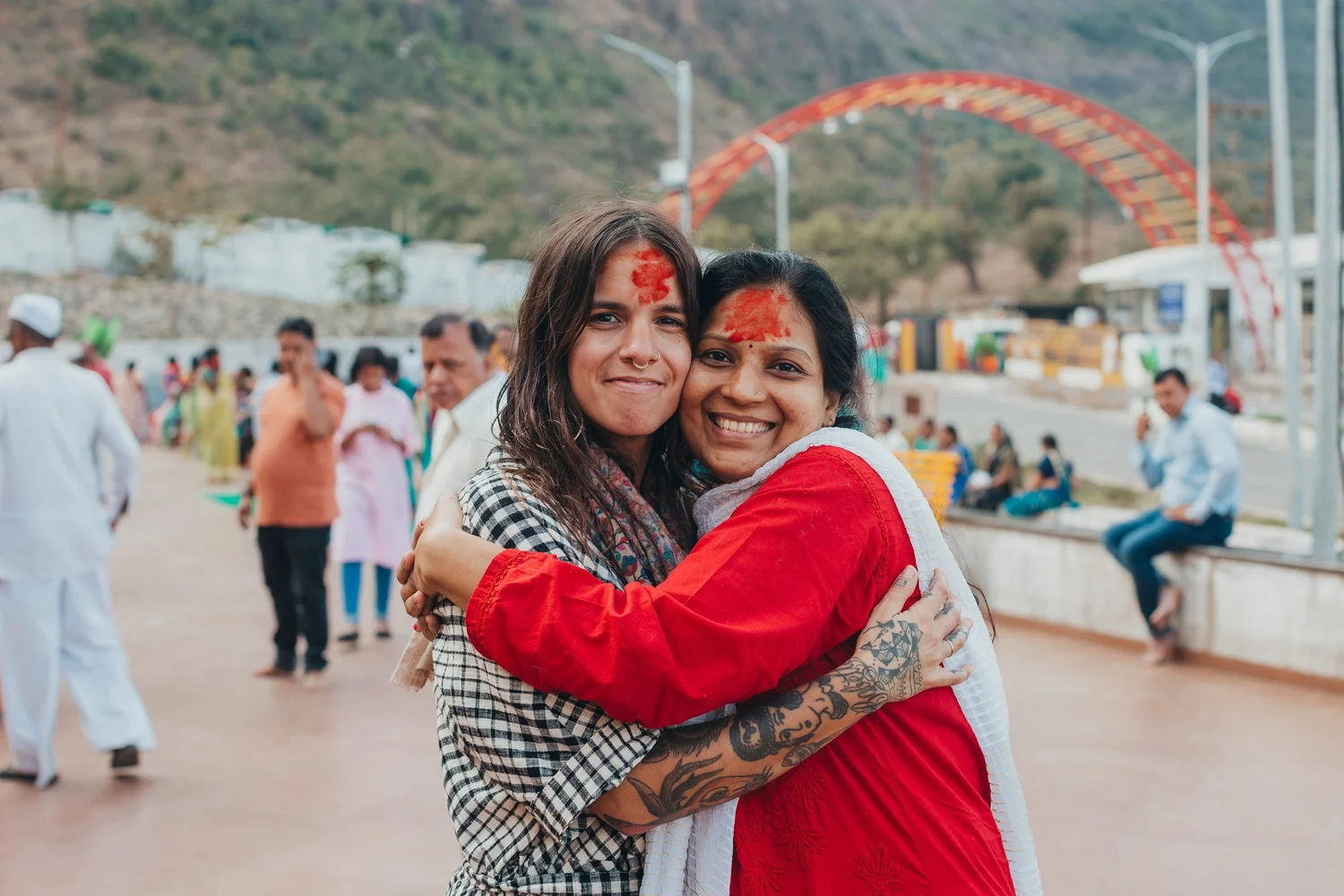
Adriana Rizzolo and Dr. Varsha Choudhari have been soul sisters and sadhakas, spiritual practitioners on the path together, for over fifteen years.
This yatra is held by both of them. One has spent seventeen years in relationship with India through Tantra and Bhakti. The other is a lifelong sadhaka from Pune, raised on this land and its devotion. Together they co-taught Primordial Mother: Fierce Faces of the Feminine, and now they bring that work home to the temples it came from.
You will not be led through India by an outsider with a guidebook. You will be welcomed in by sisters, held in practice, in friendship and in reverence.
“We need lineage. We need to learn from women who were raised on the lands where Kali speaks.”
Adriana Rizzolo
Adriana Rizzolo
Adriana weaves somatics and Tantra into a living practice of the body as temple. She is an adult sex educator, a grief and aliveness doula, and a writer, ritualist and oracle. Her relationship with India spans seventeen years of Tantra and Bhakti, and she has led numerous trips to India.
Dr. Varsha Choudhari
Varsha is a psychologist, meditation teacher and lifelong sadhaka from Pune, where she runs Awakened Living, a counseling center. She co-taught Primordial Mother (Fierce Faces of the Feminine) with Adriana, bringing the Goddess as she is lived and practiced in India.
Before there was shame, there was Shakti.
Before the Goddess was reduced to a symbol, she was the earth. She was birth. She was destruction. She was erotic intelligence. She was the mystery that creates worlds and dissolves them.
In the Primordial Mother teachings we met Kali, Lajja Gauri and Durga as living forces, not as aesthetic, not as mythology-as-self-help, and not as ancient traditions flattened into empowerment slogans. This pilgrimage takes that work out of the screen and into the land those forces come from.
In Sanskrit a sacred journey is a yatra. The pilgrim travels not for pleasure but to practice inside a particular energy field, to receive darshan, the sacred seeing, of a holy place. We go as yatrikas. We go to be seen by her.
Who this pilgrimage is for
This container moves fast and goes deep. We keep it for women and femmes who already know how to listen to their oracular nature, and who can stay with what rises without abandoning themselves.
You are ready if…
- You have an established oracular and somatic practice. You can hear your body's yes, no and not yet, and you trust it.
- You have done prior deep work: Body Temple trainings (e.g. Body Temple Dance® Teacher Training / UNLEASHED, Dark Goddess Doula, SHAMELESS LOVE, Primordial Mother) or an equivalent lineage of embodied, ritual or tantric study.
- You can self-resource. You know your own nervous system well enough to stay with activation, grief, rage and arousal, and to come back to safety from within.
- You are called to work consciously in the realms of sex, death, rebirth and ritual, not to be rescued from them.
- You want to be in reverent relationship with Indian goddess traditions: to study, to receive, to follow local custom, not to consume.
- You can live simply and in community: early mornings, shared practice, temple etiquette, travel that is not built for comfort.
- You are resilient in body and spirit, and can meet physical discomfort as part of the practice.
- You are willing to follow a strict, delicious vegetarian Ayurvedic diet (no raw food) while we're in India, and to honor the rules we have in place for both safety and cultural reasons.
This is not for you if…
- This would be your first deep embodiment, trauma or ritual container.
- You are in acute crisis, fresh loss or active destabilization and need clinical or 1:1 care right now.
- You are looking for a holiday, sightseeing or shopping, or for India as a backdrop.
- You are seeking comfort or luxury.
- You want to collect peak experiences, or to bypass the body with spiritual language.
- You need the facilitators to regulate you through every intensity.
- You are not willing to honor temple rules, local lineage, and the dignity of the people we meet, especially at the home for the dying.
Not sure where you land? Say so in your application. We'd rather have the honest conversation.
Four realms, one body
The route is the teaching. Each place opens a realm, and the body is where we meet it.
Ritual
We cross in on purpose. Arrival becomes rite: naming what you carry, what you are offering, and what you are asking of her.
- Setting vows & intention
- Temple etiquette & cultural orientation
- Offering as devotion, not transaction
Sex
The unashamed mother: headless, rooted, birthing, abundant. Here we meet the pelvis as a center of intelligence and eros as creative life force.
- Releasing inherited shame
- Embodied fertility beyond reproduction
- Receiving from the ground, not performing for love
Death
Kali doesn't destroy your life. She destroys the identities that keep you from living it. At her ghat, and beside those at the end of life, we practice not turning away.
- Sacred anger as life force
- Ego death & letting endings be endings
- Sitting with grief, mortality & service
Rebirth
From Lajja Gauri's birthing posture to Kali's burning ground, the route is one turn of the wheel: maiden to mother, and the crone honored in you.
- Integration practices on the road
- Oracular listening for what's being born
- Carrying the work home
The journey
Shown as a three-phase arc.
Mumbai: the threshold
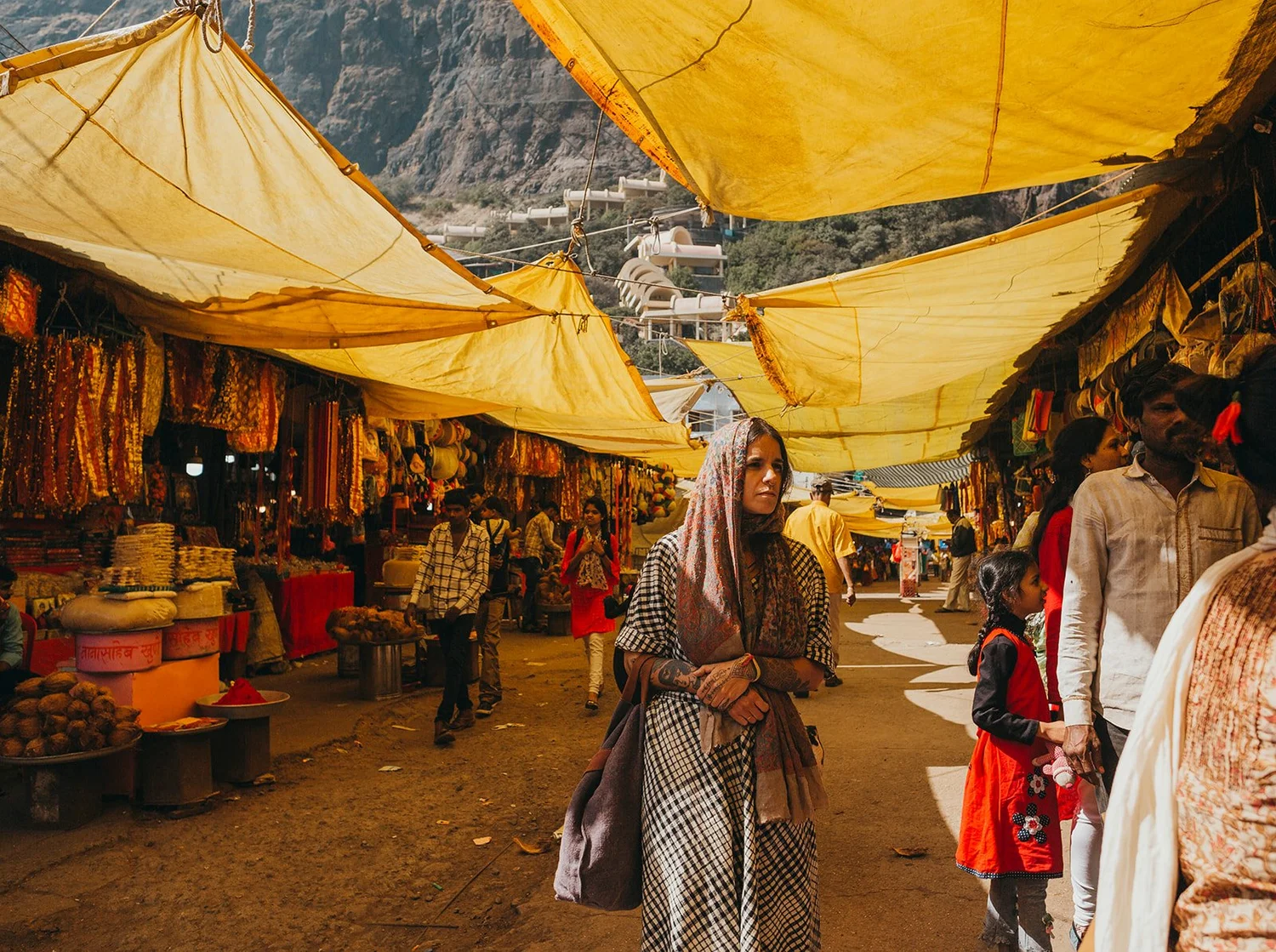
RitualWe gather, land in our bodies, and cross the threshold together. Orientation to culture, custom and the practices that will hold us, so that we arrive as pilgrims and not as visitors.
Mumbai is itself a goddess city. Its very name is said to come from Mumba Devi, the Great Mother of the island's first people.
Karnataka: Lajja Gauri
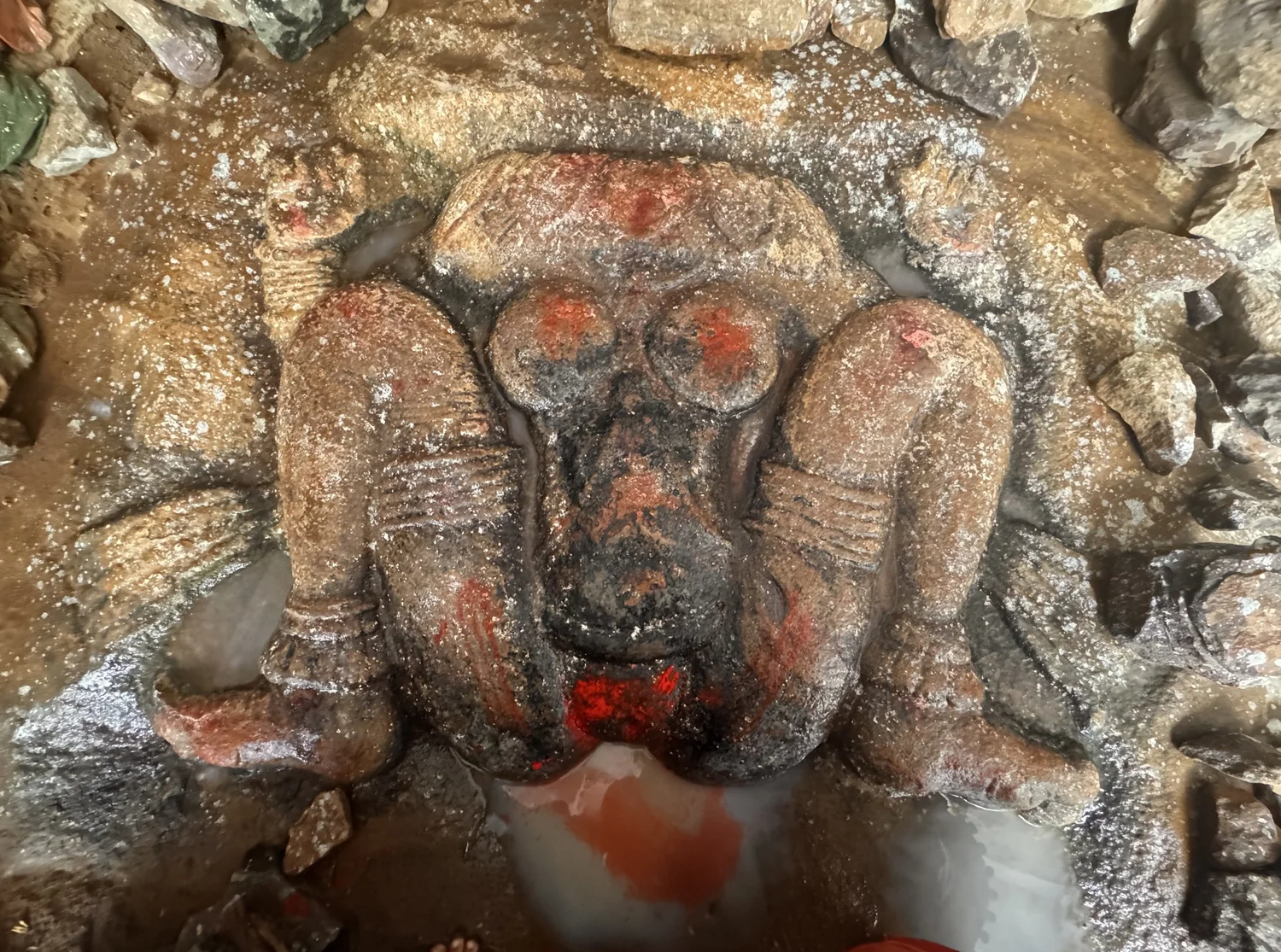
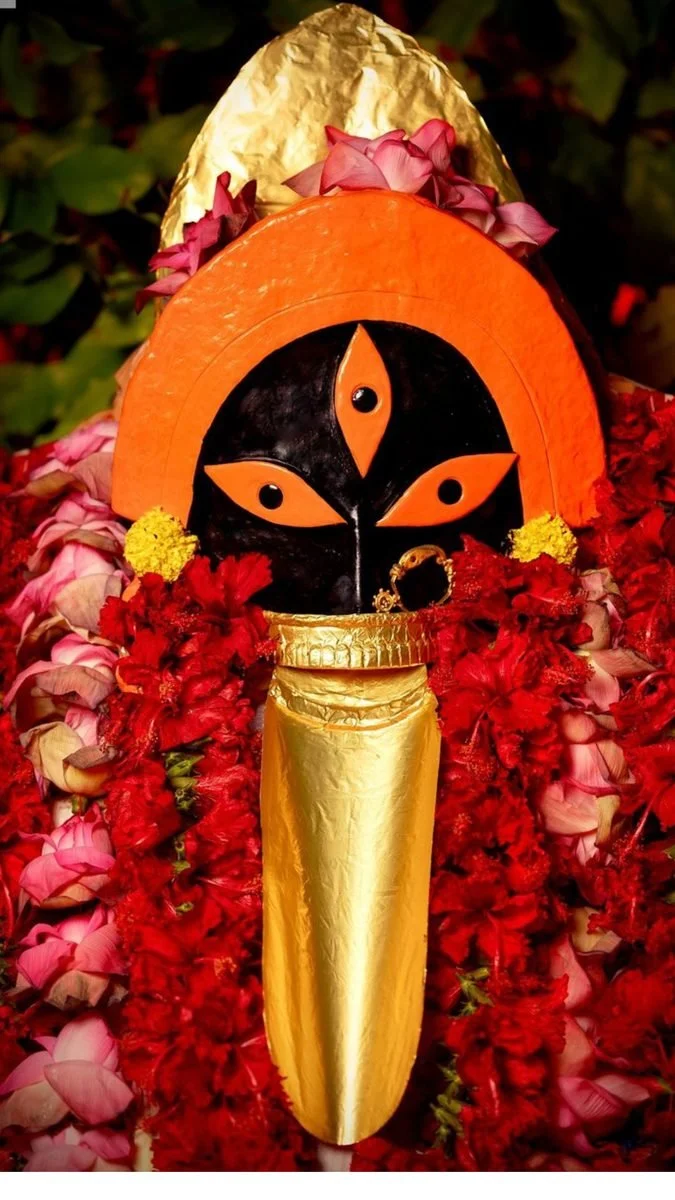
SexRebirthLong before the feminine became hidden, she was depicted as radically open. Lajja Gauri sits in the posture of birth, knees wide, yoni open, a blooming lotus where her head would be. She doesn't ask to be looked at politely. She asks you to remember that creativity comes not from striving but from relationship with the earth, the pelvis, and the mystery.
Here we work with the body as sacred, eros as creative power, and the shame we inherited: laid down on ground that is older than it.
Lajja Gauri temple, Karnataka
Kolkata: Kalighat & Nirmal Hriday
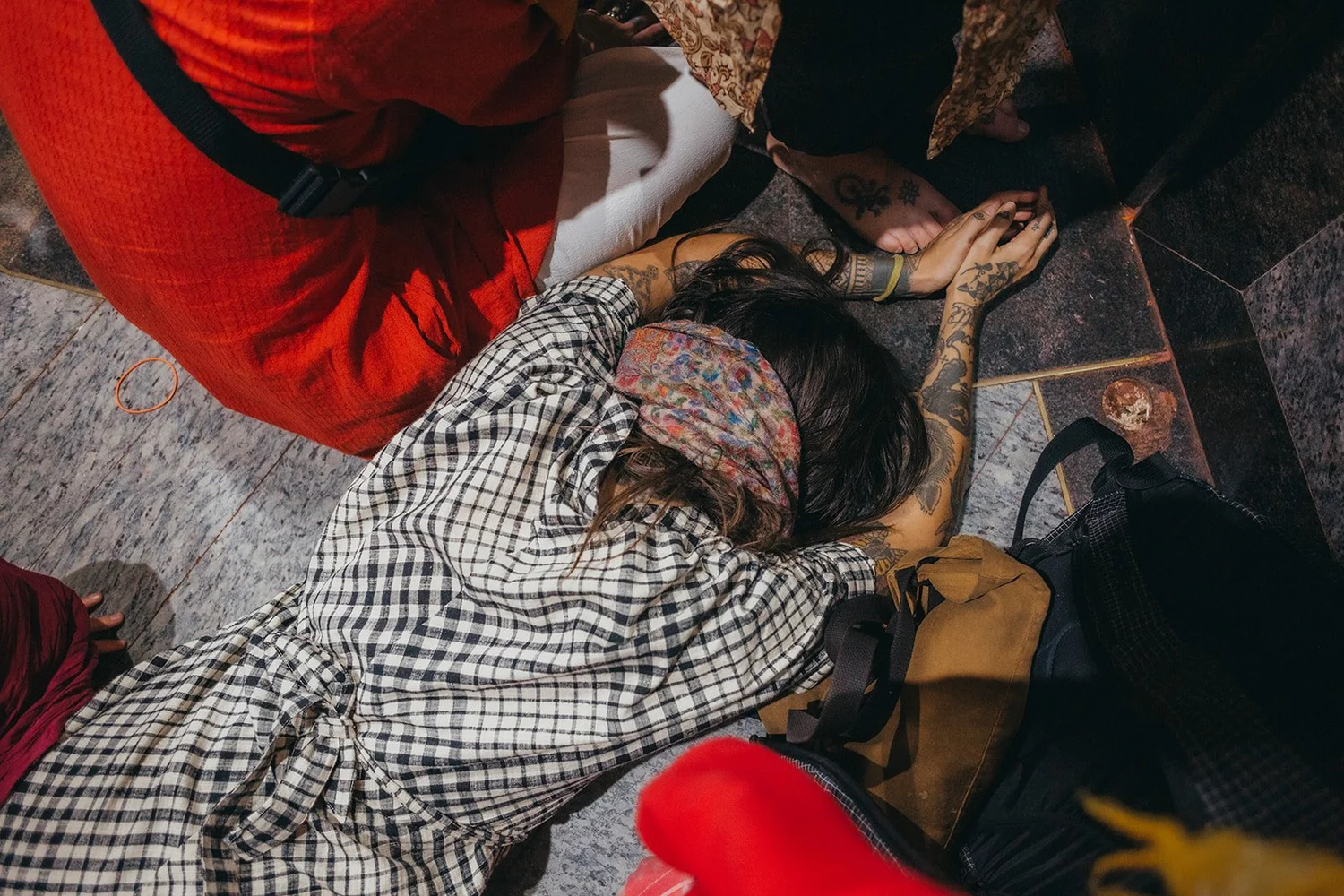
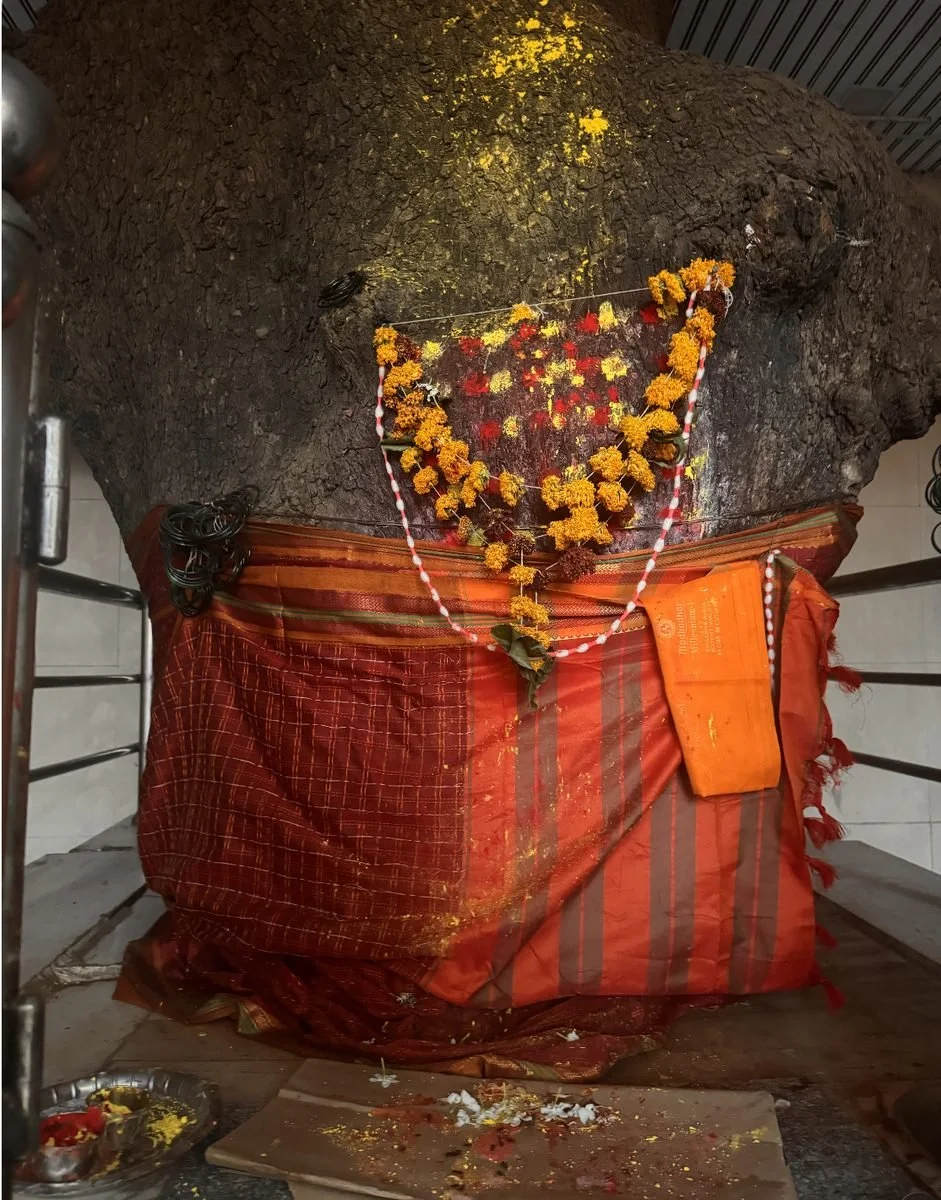
DeathRitualRebirthWe end where Kali lives. At Kalighat we come to the fire that liberates, the mother who does not flinch from death and will not let us flinch from it either.
And a few steps from her temple is Nirmal Hriday, the "Home of the Pure Heart," where Mother Teresa began caring for the dying in 1952. Here the teaching becomes very simple: to witness, to be present, to serve where invited, and to let grief move through the body as devotion. We come as guests of the Missionaries of Charity and follow their guidance entirely.
Not as tourists, but as lineage bearers
It is not enough to channel. We must also study.
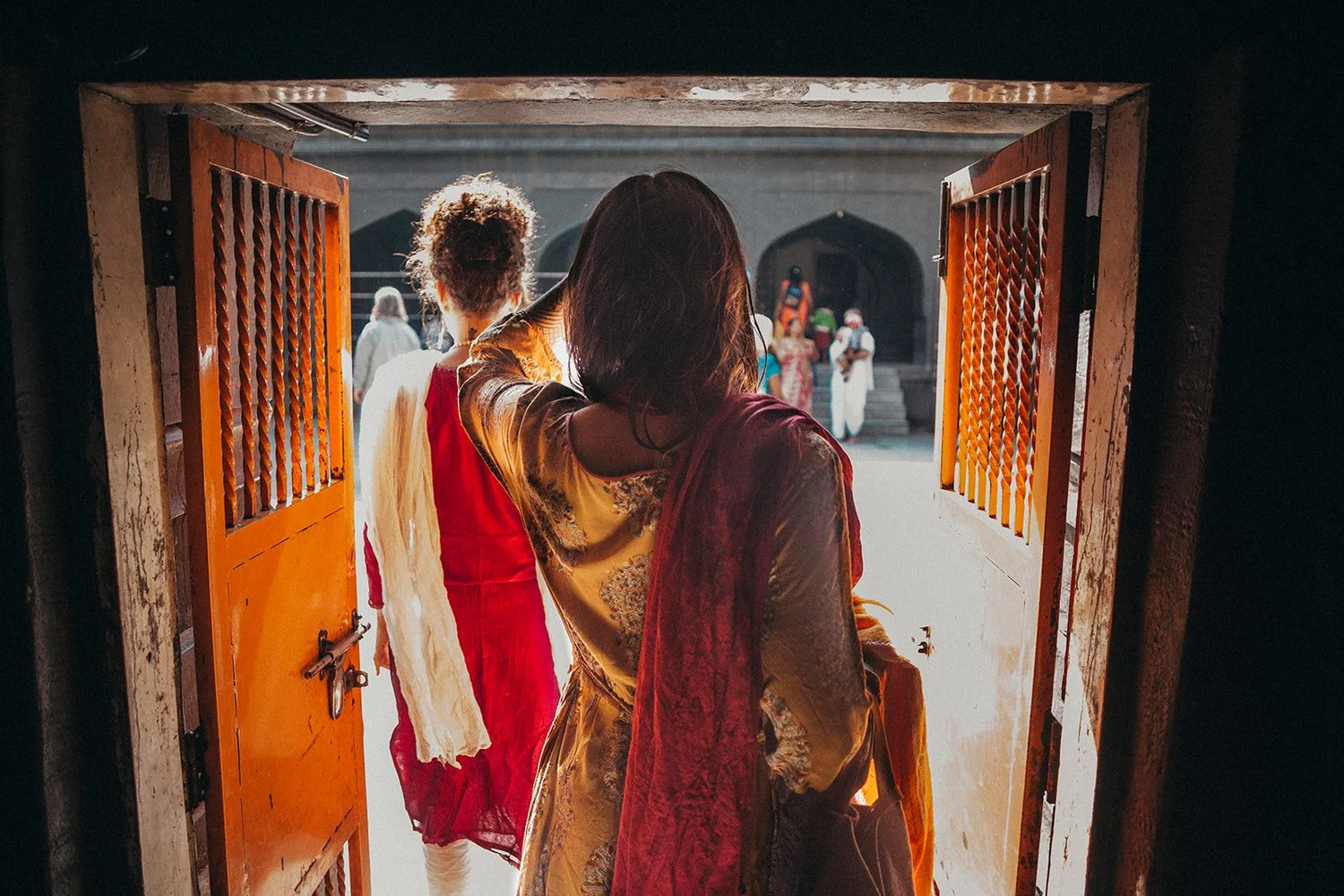
These goddesses are not a costume and India is not a backdrop. They are living traditions, held by living people, in temples with their own priests, customs and rules. We enter as guests: we learn the etiquette before we arrive, we follow the guidance of the people who keep these places, and we offer back.
At Nirmal Hriday we are guests of a Catholic religious community caring for people at the end of their lives. Their dignity comes before our process. No photographs, no spiritual tourism, only presence and service as the Sisters invite.
The daily rhythm
Early mornings, shared practice, temple days, and space to metabolize. Each day moves between the temple and the body.
Body Temple Dance®
Adriana's movement practice: trance, breath and sound to move grief, rage and pleasure through the body instead of storing them.
Ritual & offering
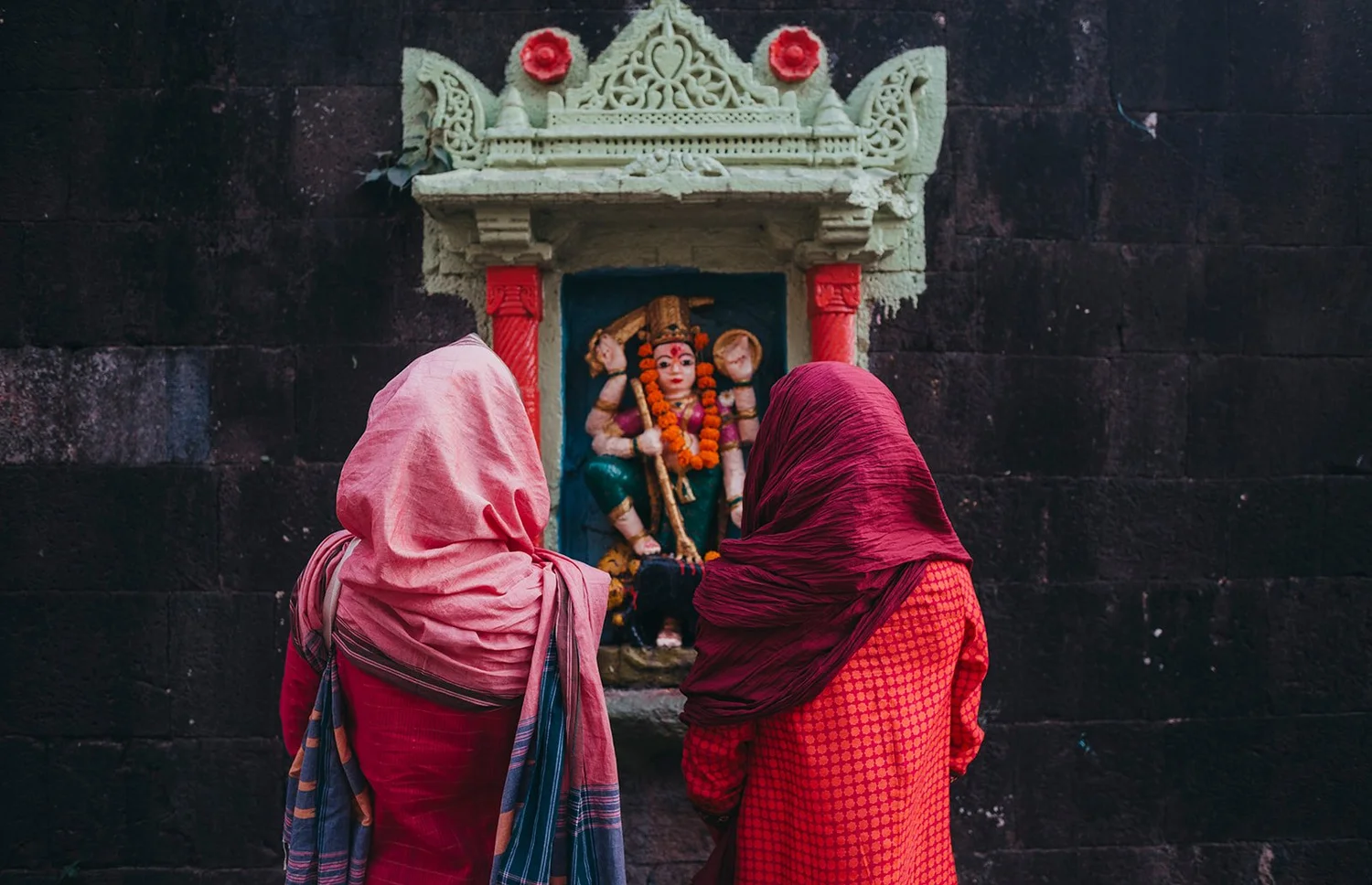
Temple visits held as ritual, not sightseeing. Offerings, vows, and ceremony shaped by the land and by local custom.
Oracular listening
Practice in listening, being the vessel, and taking responsibility for what comes through. Oracular knowledge arises from emptiness and from deep practice.
Trance & embodiment
Somatic work for staying present with high activation: arousal, awe, grief. Safety from within, not bypass.
Chant, mantra & meditation
Devotional practice to root the nervous system and open the heart before we enter each sacred site.
Integration circles
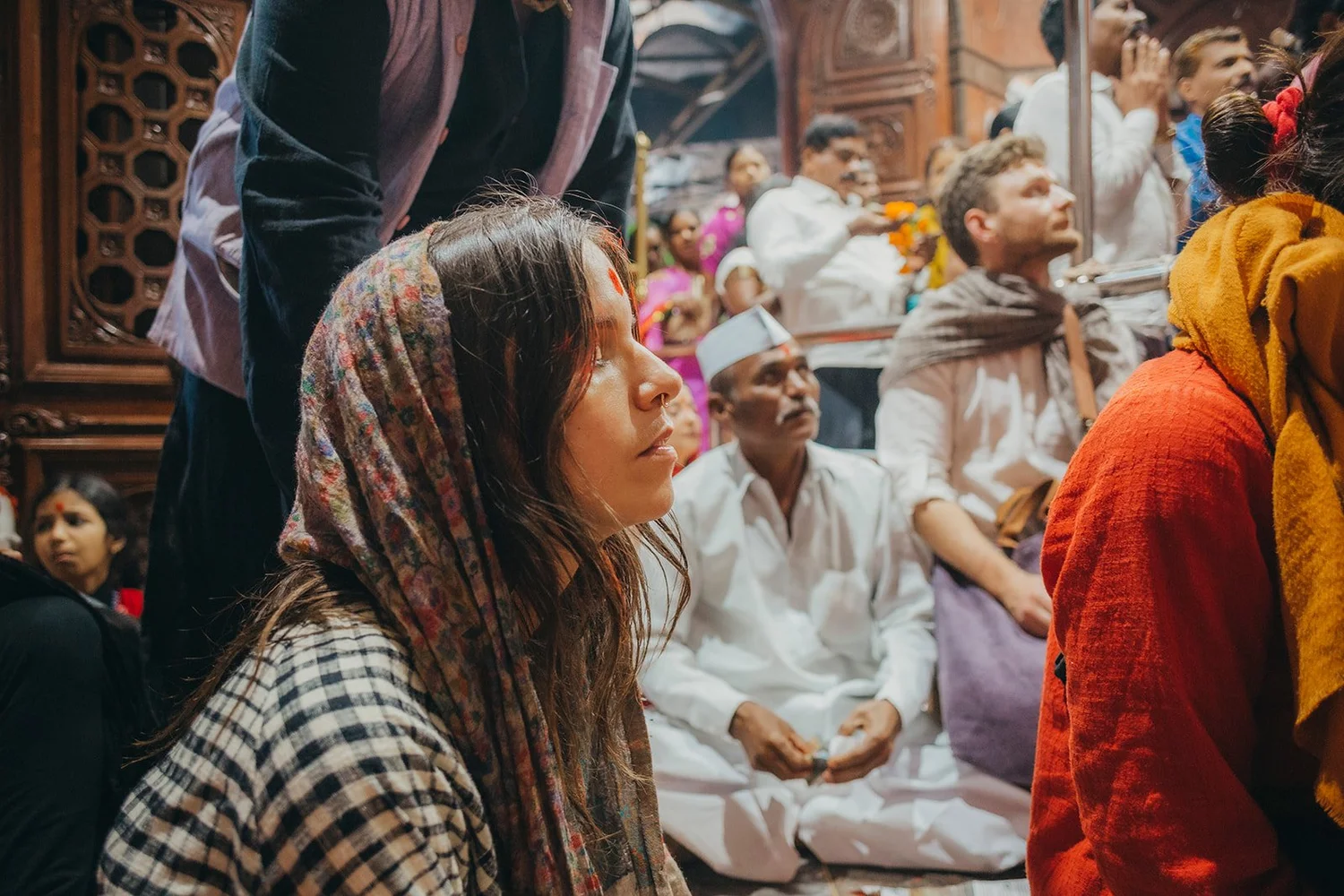
Witnessing each other with the Mother Gaze, a loving attention that doesn't look away, so the work lands in the body and comes home with you.
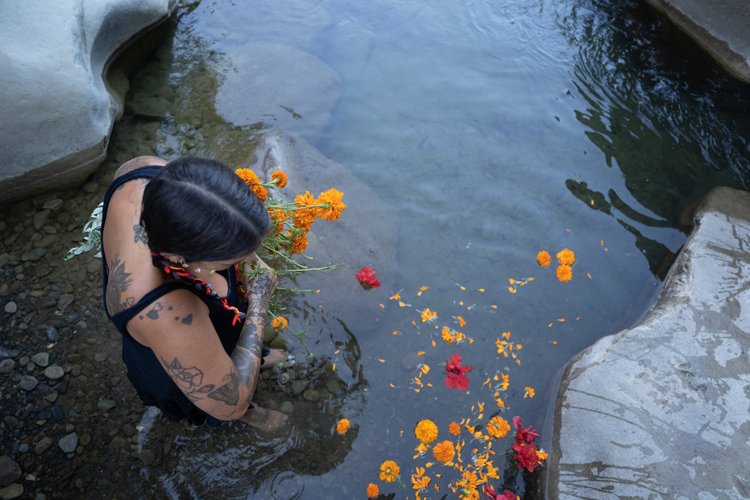
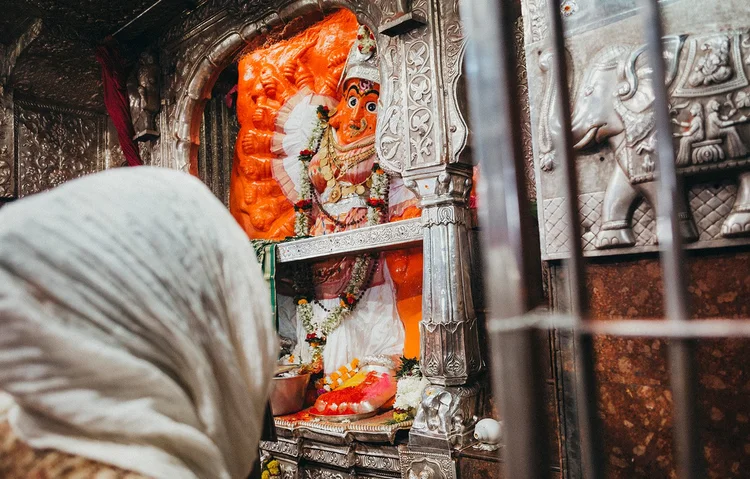
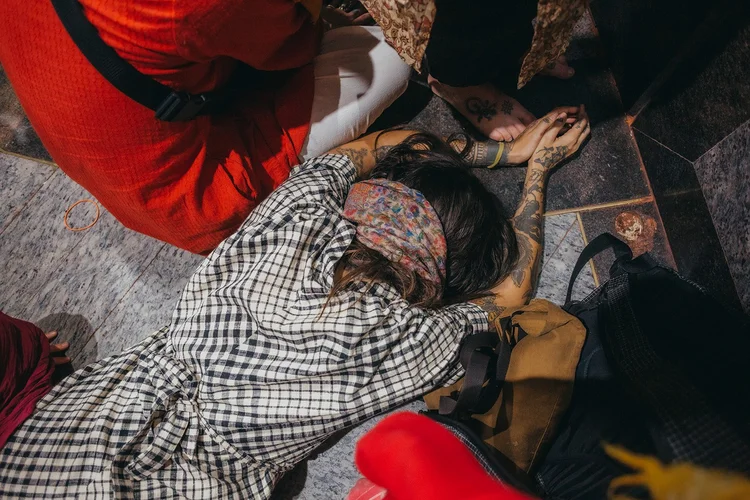
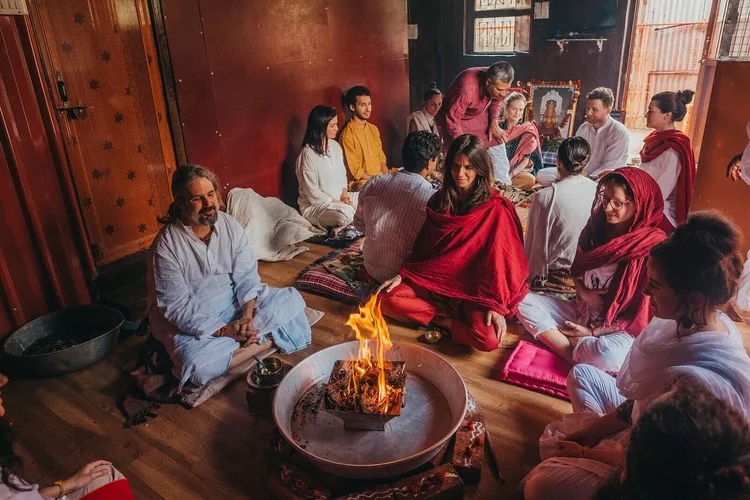
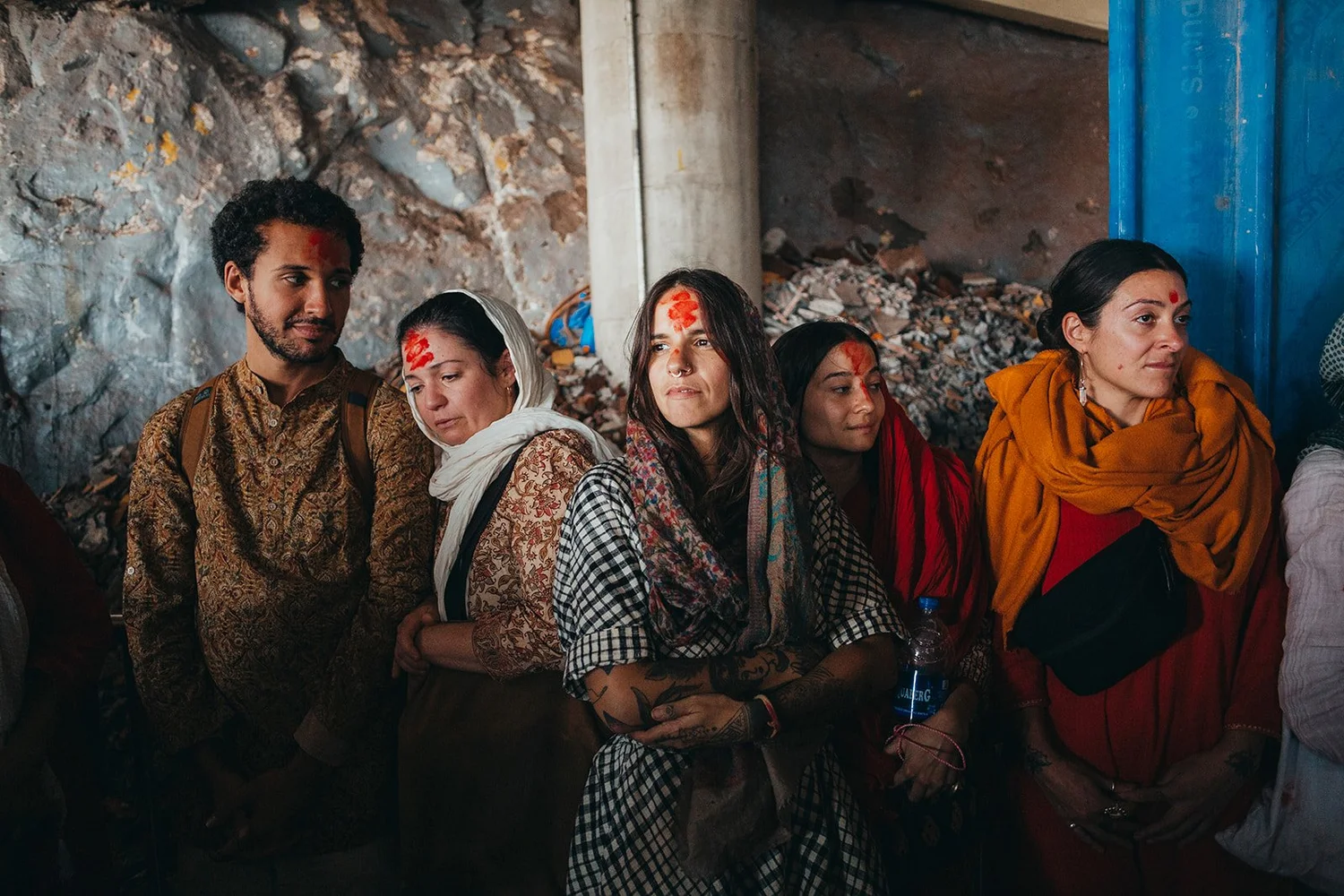
Photos: Body Temple Church, past India journeys
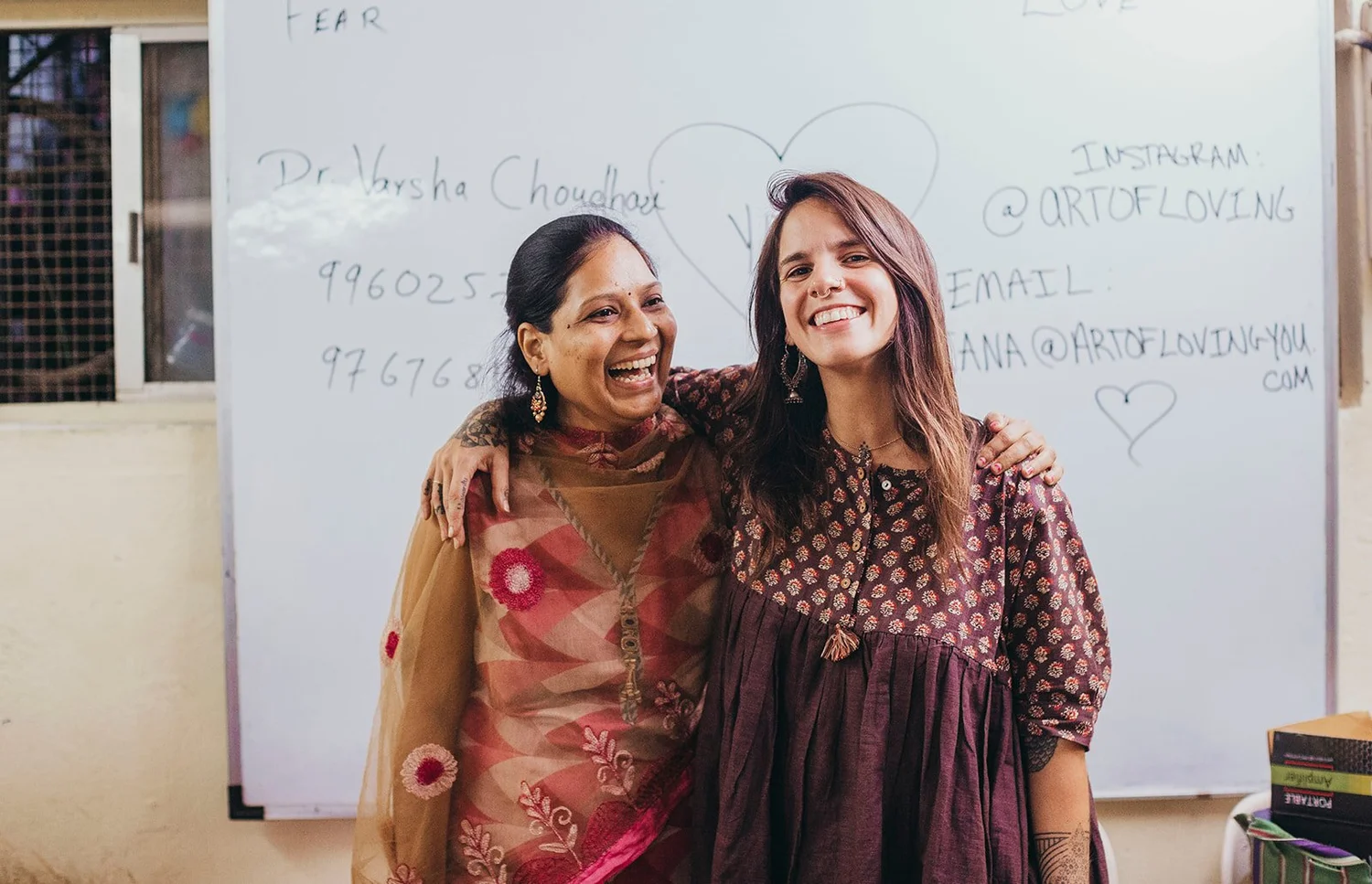
Held by sisters, rooted in lineage
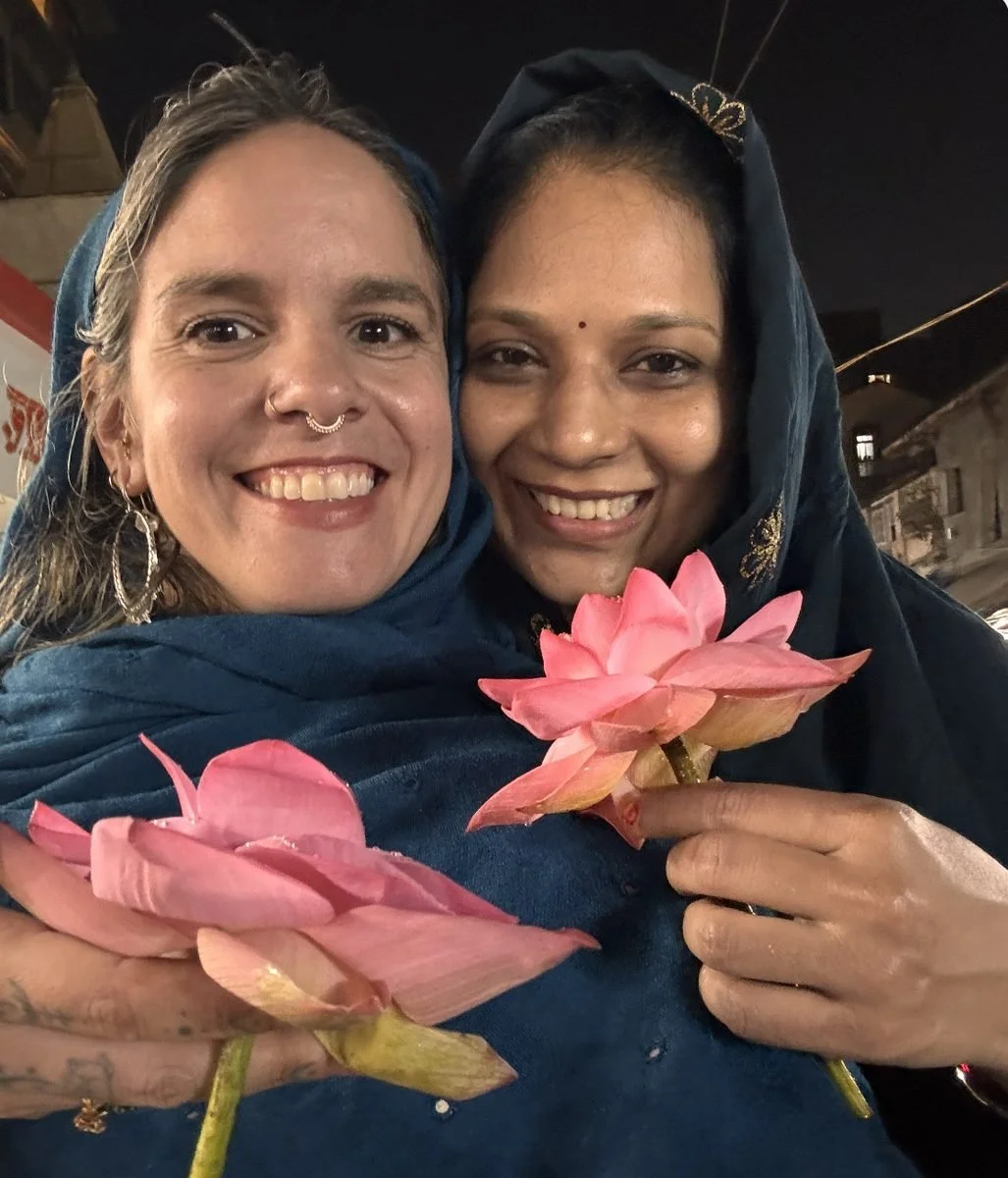
Adriana and Varsha lead together, as equals, the way they have walked the path side by side for over fifteen years. You receive the Body Temple container and the eyes of a lifelong sadhaka from Pune. Meet your guides above.
- Your guidesAdriana Rizzolo & Dr. Varsha Choudhari
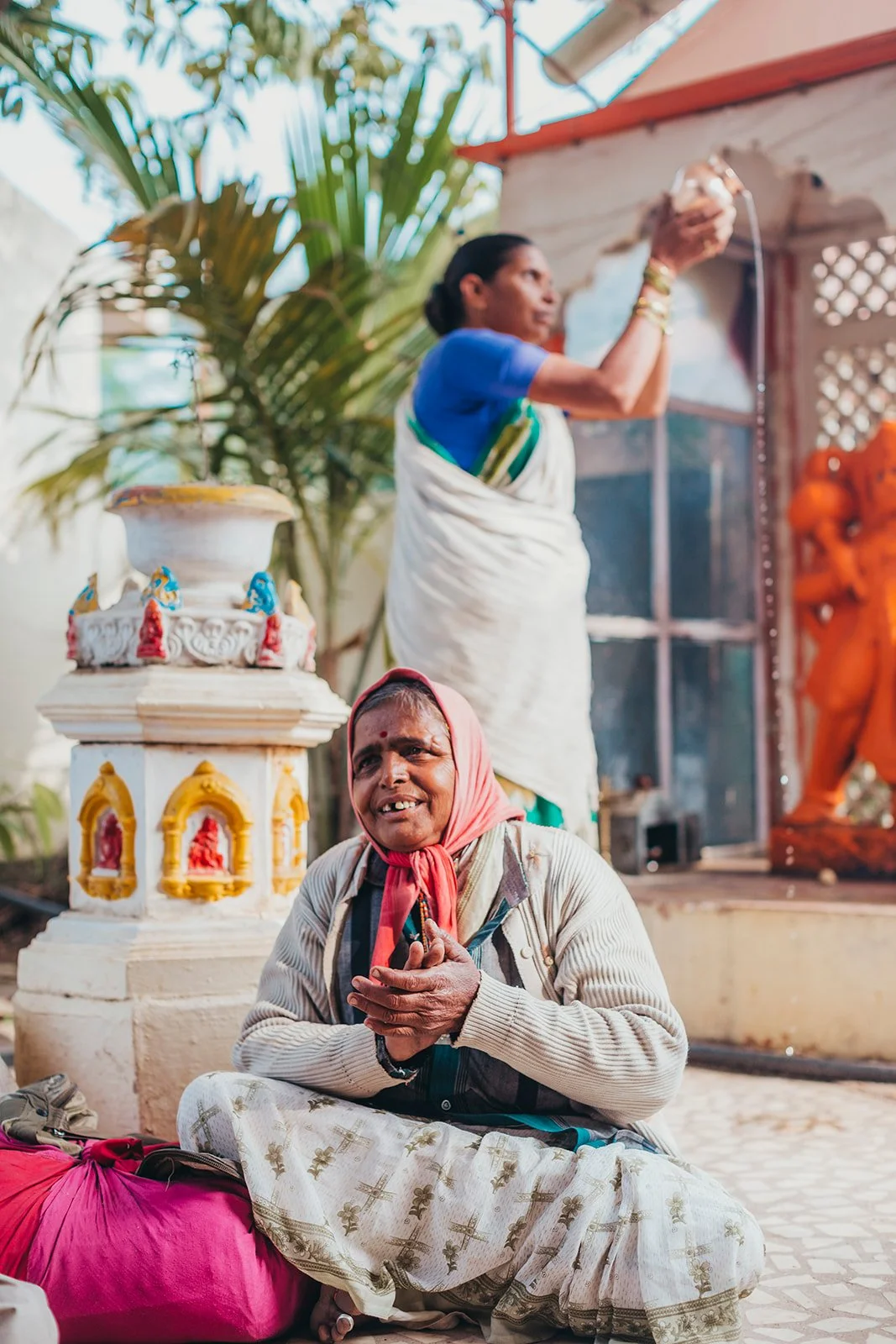
What you are really receiving
Anyone can book a trip to India. This is something else. It's an initiation held from the first orientation call to the last integration circle, by two women who have walked this path together for over fifteen years.
- Four weeks of preparation before you fly. Every week you meet live with Adriana and Varsha to learn the culture, the temple customs, the goddesses we'll sit with, and the inner work. You arrive already in practice, not jet-lagged and guessing.
- Places you would not find, or enter, on your own. We go to sacred sites that aren't on tour itineraries, alongside a sister raised on this land who knows the customs and the language of devotion, and who knows how to walk in as a guest. Doors open differently when you arrive in relationship.
- A circle of six, not a tour group. Six women and two guides, with room for each of you to be seen, held and witnessed.
- Daily practice inside the journey. Body Temple Dance®, ritual, oracular listening, chant and integration circles, so the places move through your body instead of passing by a bus window.
- Integration when you come home. Two calls after we return give what opened in India somewhere to land in your everyday life.
Put together, it's a training, a retreat and a pilgrimage in one container. We keep it to six spaces and price it at $4,000 because that is what this depth of holding requires. If it's yours, you'll feel it. If it isn't, we trust that too.
Applications close October 31, 2026.
Begin your applicationLogistics
How to apply
We say yes to the right people, not the first people. The application is itself the first ritual: tell us the truth about where you are.
Apply
Complete the written application: your practice history, prior trainings, and why this pilgrimage, now.
Conversation
If it's a potential fit, we meet on a call to feel into readiness together, both ways.
Deposit
Once accepted, a $1,500 deposit secures your place. The remaining $2,500 can be paid in full or spread over up to 3 monthly payments.
Prepare
Orientation to culture, temple custom, health and the inner work, before we ever board a plane: four weeks of weekly 1-hour live calls. Two integration calls follow after we return home.
Applications close October 31, 2026.
FAQ
What does "advanced" actually mean here?
You have a living oracular and somatic practice, you've done prior deep work (Body Temple trainings or equivalent), and you can resource yourself through strong activation. We are not screening for perfection. We are screening for capacity, honesty and self-responsibility.
Who is this for in terms of gender?
This pilgrimage is held for women and femmes. If you're unsure whether that includes you, reach out. We'd love to hear from you.
Will we be doing sexual practices at temples?
No. Our work with sex and eros happens in our own ritual space, never in a way that disrespects a temple, its priests or its devotees. At sacred sites we follow local custom and simply receive darshan, offer and pray.
What will we do at the home for the dying?
We come as guests of the Missionaries of Charity and do only what the Sisters invite and allow. That could be quiet presence, prayer or practical service, under their volunteer guidelines. The dignity and privacy of residents come first.
Is this emotionally and physically demanding?
Yes. India is intense for the senses, the schedule is full, and the material (sex, death, grief) is strong. That's why it's for advanced practitioners. We build in practice and integration daily.
What are the accommodations like?
We begin with a comfortable, nice stay in Mumbai. For the rest of the journey we sleep in simple, ashram-style lodging. This is not a luxury experience: physical discomfort is part of the pilgrimage, so come resilient and prepared.
What is included, and what does it cost?
The investment is $4,000. A $1,500 deposit secures your place. The remaining $2,500 can be paid in full or spread over up to 3 monthly payments.
Included: all accommodation, all meals and all transportation while we're in India (including flights from Mumbai to Karnataka to Kolkata), airport transfers if you arrive January 20 and depart January 28, four weeks of cultural orientation before we fly (weekly 1-hour live calls), and two integration calls after we return home. Not included: your flight to Mumbai and your flight home from Kolkata.
No scholarships are available for this pilgrimage.
Can I arrive early or stay longer?
We don't recommend arriving early, for the health of the group. If you'd like a longer trip, we strongly encourage extending your travels after the pilgrimage ends on January 28. Airport transfers are arranged for arrivals on January 20 and departures on January 28.
What is the cancellation policy?
Full refund available until December 1, 2026. After December 1, 2026, no refunds for any reason.
When is the application deadline?
Applications close October 31, 2026. We review applications as they arrive, and with only six spaces the circle may be complete before then.
Do I need to be Hindu, or religious at all?
No. You need reverence, curiosity and willingness to follow the customs of the places we enter.
Who can I talk to before applying?
Write to us at support@bodytemple.church. We are happy to talk before you apply.
Come sit at the feet of the Mother who births and devours.
From the open lotus of Lajja Gauri to the burning ghat of Kali, come walk the whole wheel of sex, death, rebirth and ritual in your body, with women who know how to listen.
This is a training, a retreat and a pilgrimage in one, and it's held for only six women. Applications close October 31, 2026.
Begin your application8 nights / 9 days · January 20–28, 2027 · $4,000 ($1,500 deposit, balance in full or up to 3 monthly payments) · 6 spaces only, intentionally intimate · By application only · Apply by October 31, 2026
Apply for the India Goddess Pilgrimage
January 20–29, 2027 · 6 spaces · For experienced practitioners only. We read every application with care and will be in touch personally.